
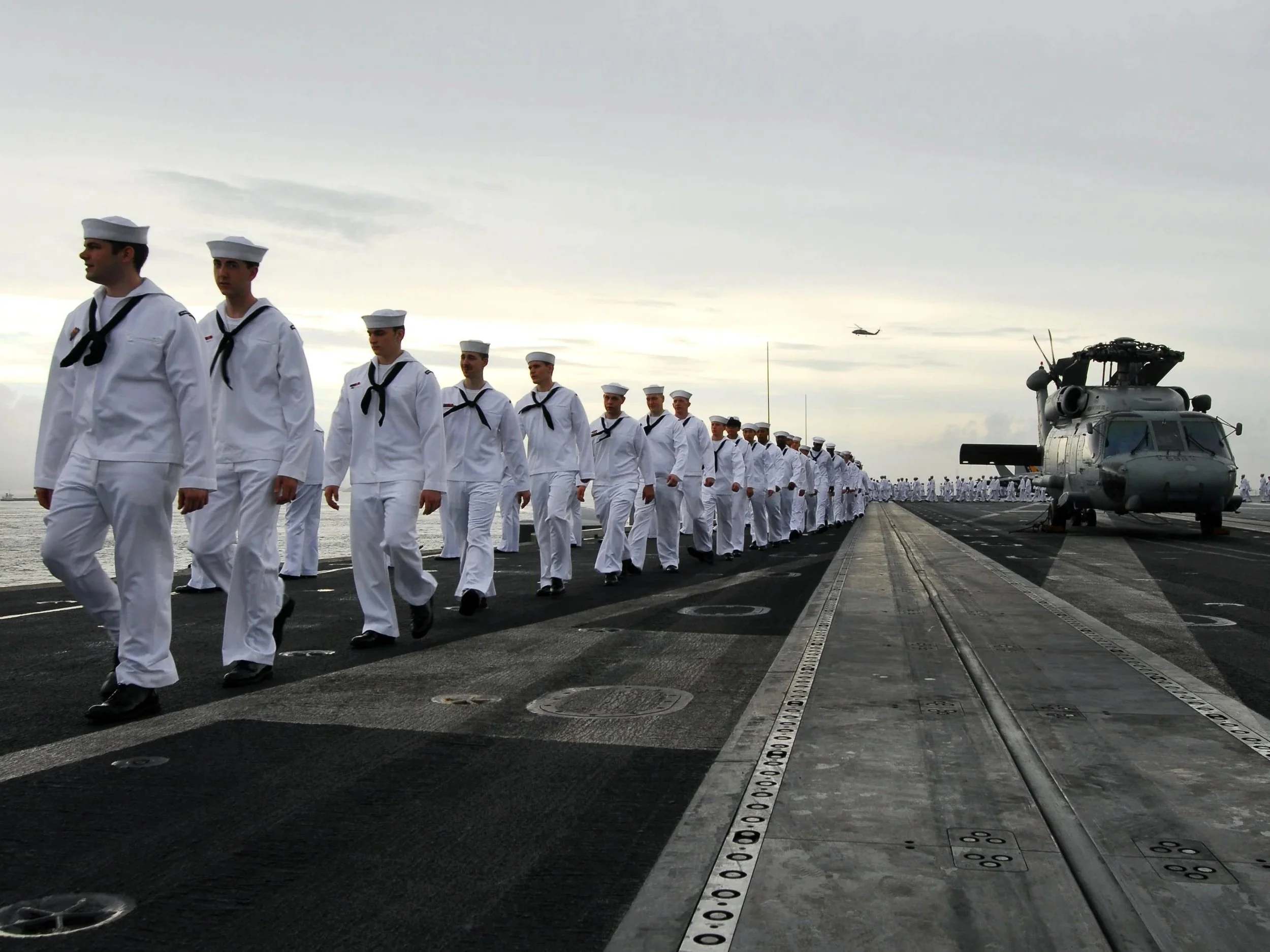
“Leadership doesn’t announce itself. It simply shows up. It arrives in the dark, in the flood, in the fight.”
- Steven-Paul Lapid, USN (Ret.) author of Helm & Horizon
About the Author

Born November 30, 1982
Birthplace Detroit, Michigan, USA
Occupation Author, Leadership Educator, Defense Analyst
Military Service United States Navy (2000–2022)
Current Role Senior Military Analyst
Known For Helm & Horizon
Education University of Michigan, University of Florida
Location Southern California
Steven-Paul Lapid is an American author, retired United States naval officer, leadership educator, defense analyst, and founder of Helm & Horizon, a leadership platform dedicated to developing principled leaders through books, articles, professional interviews, and educational resources. Drawing on more than 26 years supporting the United States Navy, from time in active-duty service and continued work advancing Surface Force readiness as a defense analyst, Lapid writes and speaks on leadership development, organizational learning, military readiness, and professional military education. His work focuses on helping leaders translate timeless principles into practical habits that strengthen character, build trust, and improve organizational performance.
Lapid is the author of Helm & Horizon: Daily Leadership Principles for the Motivated Sailor, a leadership guide built around 365 daily leadership principles that synthesize lessons from military history, behavioral science, organizational leadership, and classical philosophy. Through his writing and educational initiatives, he advocates that leadership is not defined by position or authority, but by disciplined habits, strong character, and a lifelong commitment to learning and service.
Education and Professional Development
Lapid enlisted in the United States Navy in 2000 as an Electronics Technician, but soon cross-rated to Information Systems Technician, gaining operational experience in communications, networking, and information systems that would later shape his approach to organizational effectiveness.
After demonstrating strong academic and professional performance, he was selected for the Navy's Seaman to Admiral-21 (STA-21) commissioning program and attended the University of Michigan, earning Bachelor degrees in Political Science, Communications, and Electronic Media. He later completed two Masters programs, one at the University of Florida and the other at the University of Michigan, where his graduate studies further developed his interest in leadership communication, organizational behavior, and strategic messaging. He is also an is an alumnus of the Aspen Executive Seminar on Leadership, Values, and the Good Society.
His educational background reflects an interdisciplinary approach that combines political science, communication theory, media studies, leadership, and organizational performance.
Naval Career
During more than twenty-two years of active-duty service, Lapid served in operational, training, and staff assignments across the surface fleet and special operations community. He steadily rose from the deckplates to commission as an officer, earning a reputation for his effective mentorship across all ranks and building cohesive, high-performing teams.
His early sea tours included service aboard the guided missile destroyers USS Gonzalez (DDG-66) and USS The Sullivans (DDG-68), and the guided missile cruiser USS Gettysburg (CG-64). Lapid was the Combat Systems Officer aboard the amphibious transport dock USS Somerset (LPD-25), and Plans, Tactics, and Training Officer aboard the amphibious assault ship USS Boxer (LHD-4). In each assignment, he became a trusted voice in readiness, certification, and operational planning; recognized for his calm presence, tactical expertise, and practical approach to leadership.
Ashore, Lapid served at Fleet Area Control and Surveillance Facility Pearl Harbor, Naval Computer and Telecommunications Station Bahrain, and SEAL Team THREE, where he served as Assistant Operations Officer. These assignments exposed him to fleet communications, multinational operations, operational planning, and special warfare support while broadening his understanding of leadership across diverse organizational cultures.
Throughout his career, Lapid contributed to training modernization, warfighting readiness, certification programs, and leadership development. He was recognized for superior performance in leadership and training assignments, including graduating as the distinguished graduate of the Navy's Department Head School and receiving the Arleigh Burke Leadership Award.
His experiences leading organizations through high operational tempos, deployments, inspections, and organizational change became the foundation for much of his later writing on leadership.
Transition to Civilian Service
Following his retirement from the Navy, Lapid joined Sigma Defense Systems as a Senior Military Analyst supporting Commander, Naval Surface Force, U.S. Pacific Fleet (COMNAVSURFPAC).
In this role, he has supported initiatives involving fleet training policy, readiness management, certification standards, data analysis, and the modernization of Surface Force training systems. His work has focused on aligning operational requirements with evolving training methodologies while helping improve fleet readiness through evidence-based decision-making and organizational analysis.
His professional interests include organizational change, instructional design, systems thinking, leadership development, and the integration of data-driven approaches into military training.
Writing and Leadership Philosophy
Lapid's writing centers on the belief that leadership is developed through deliberate practice rather than isolated moments of inspiration. Influenced by military history, classical philosophy, organizational psychology, behavioral economics, and modern leadership research, he argues that exceptional leadership emerges from the accumulation of disciplined daily habits.
His book, Helm & Horizon: Daily Leadership Principles for the Motivated Sailor, presents 365 daily leadership lessons that combine historical case studies, leadership literature, and practical application. The work was developed to serve as a professional development resource for Sailors while remaining applicable to leaders in government, business, education, and nonprofit organizations.
He has written leadership articles, book reviews, professional interviews, and essays on military leadership, professional military education, organizational behavior, and leader development. His work has appeared through DODReads, Real Clear Defense, and other professional military publications. Lapid has made appearances on numerous podcasts and documentaries such as the Bravo Zulu Podcast and Dreamer’s Reality.
Lapid regularly engages with military and civilian audiences through professional writing, book promotion, educational outreach, and discussions focused on leadership and organizational effectiveness. His work has been featured through interviews, book reviews, and articles within the military leadership community.
He continues to collaborate with authors, educators, and military professionals to expand access to leadership resources and strengthen professional military education.
Personal Life
Lapid resides in Southern California with his wife and children. Outside his professional work, he continues researching leadership, military history, organizational behavior, and the application of classical philosophy to modern leadership challenges. His long-term goal is to contribute enduring leadership resources that help develop future generations of military and civilian leaders.



Author Information
Steven-Paul Lapid
Author of Helm & Horizon
Publisher: Shine Press
ISNI: 0000 0005 3079 9711
ORCID: 0009-0003-4046-0685